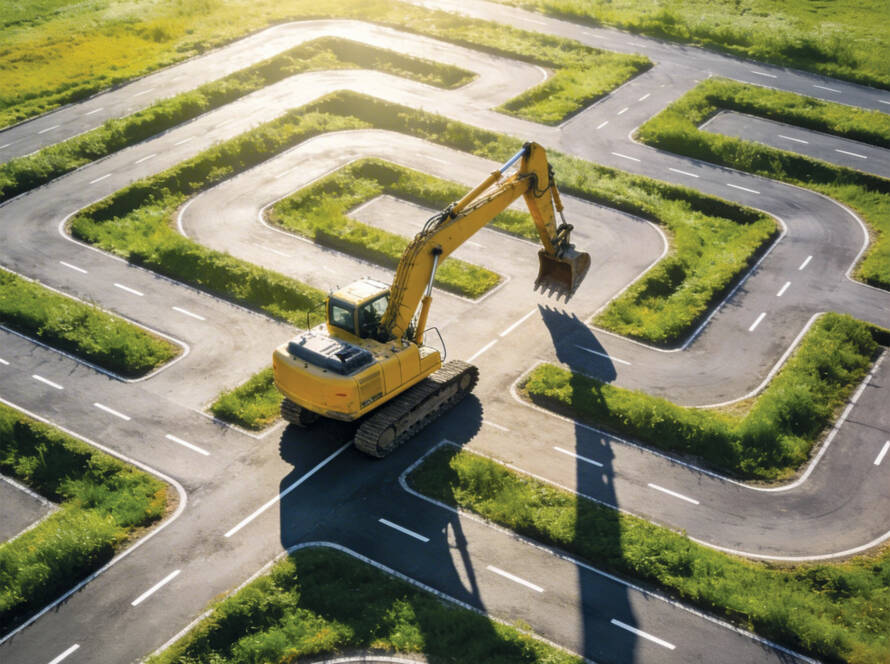
A paving crew rolling fresh asphalt on a summer morning is just the tip of a massive logistical iceberg. Every kilometre of a six-lane road requires 51,800 tonnes of aggregate, which translates to roughly 2,590 truckloads of material.
“Aggregate is the basic foundational ingredient to everything we build,” said Sharon Armstrong, executive director of the Ontario Stone, Sand & Gravel Association (OSSGA). “It’s in our homes, it’s in our hospitals, it’s in our roads.”
That’s just the aggregate. If a kilometre of new road is paved with hot mix asphalt (HMA), up to 12,960 tonnes of asphalt may be required. Depending on the vehicles used, this amounts to anywhere from 370 to 650 truckloads. Then there’s the equipment needed to quarry the aggregate. Some of it is hauled to the job site. Other trucks take aggregate to the asphalt plant to create asphalt pavement. That product is then transported to the job site, where a range of heavy equipment puts the road together.
All these elements, and many more, make up the supply chain that builds Ontario’s roads. It’s a supply chain that most people never see, but that matters nevertheless. And it matters more than ever, now that the Province of Ontario has committed $31 billion to expand the province’s road network to reduce highway gridlock. This investment represents a significant opportunity for Ontario’s road building industry.
Aggregate is very heavy. That’s why our industry motto is, ‘Don’t make gravel travel.’
Sharon Armstrong, Ontario Stone, Sand & Gravel Association
“I think it will certainly create a lot more projects for our members, especially contractors,” said Donn Bernal, principal at Corfinium Solutions and technical advisor for the Ontario Road Builders’ Association (ORBA). “It’s all new work versus the standard renewal projects that are typically in place.”
However, it remains to be seen whether Ontario’s supply chain can meet the demands of this “infrastructure moment.” That demand comes at a time when many aggregate quarries are running out of materials, while opening new ones is a costly, lengthy, and complex process that can take a decade or more just to secure a licence.
The scale of demand
Ontario has fallen behind in repairing and expanding its infrastructure for decades. This is why the 2026 Ontario Budget has allocated more than $210 billion over 10 years toward infrastructure projects. Besides the $31 billion for roads, the province has earmarked $61 billion for public transit and $56 billion for healthcare infrastructure.
“We are in a situation right now where we are rebuilding,” said Armstrong. “We are looking at creating the infrastructure we need to repair what’s been done in the past, and to grow and become a stronger province in the future.”
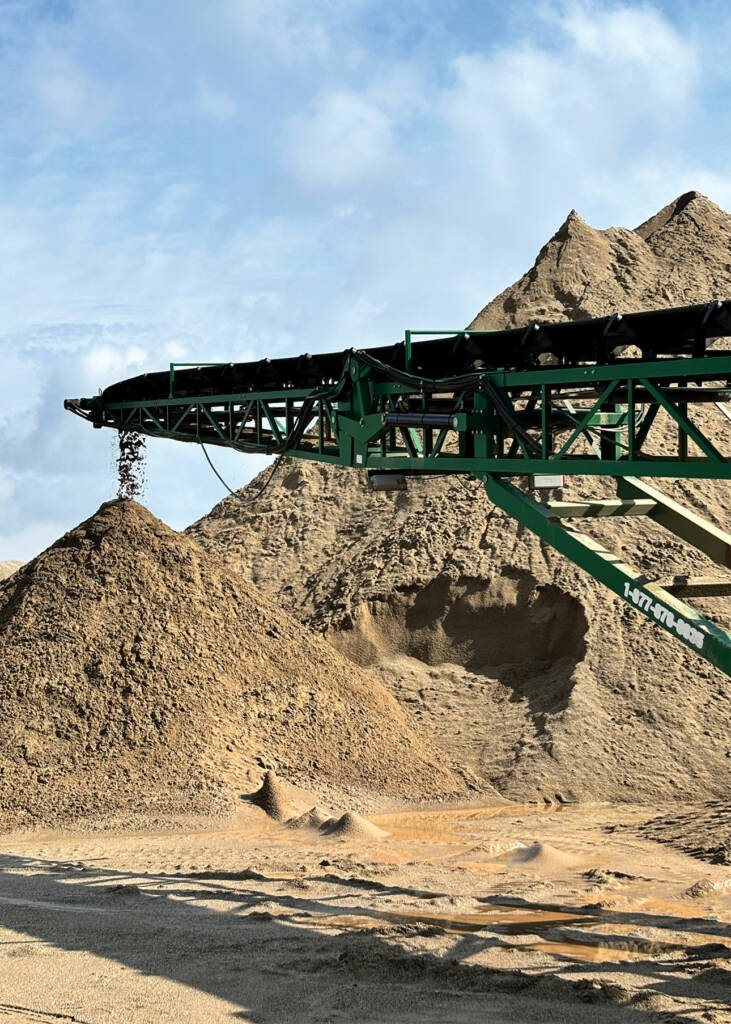
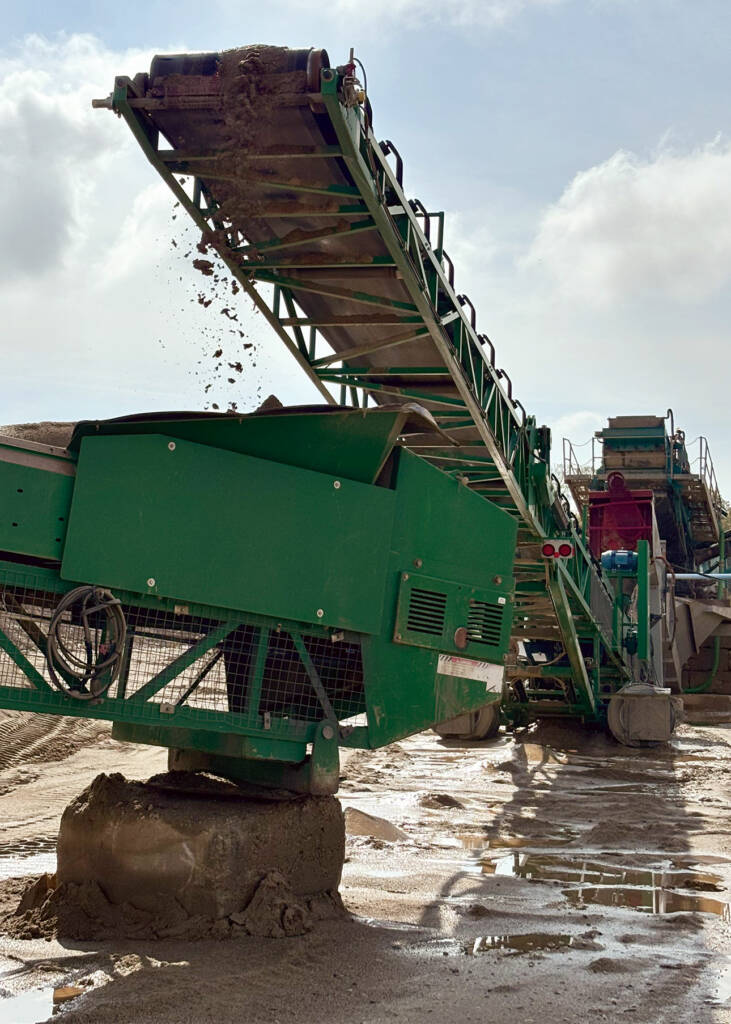
When it comes to the state of Ontario’s highways, doing nothing is not an option. “The costs of gridlock are real,” reads the 2026 Ontario Budget document. “The Canadian Centre for Economic Analysis estimates that the economic and social impact of gridlock in Ontario was $56.4 billion in 2024, and could potentially rise to $108 billion annually by 2044 if no action is taken.”
Meeting this demand will require mobilizing materials on a massive scale, at a time when current demand is not trivial. Currently, the Ontario aggregate industry extracts and processes about 164 million tonnes of material annually, while supporting 41,000 direct and indirect jobs. On the paving side, Ontario uses between 7.4 and 8.2 million tonnes of HMA every year, with the broader road building sector employing 56,000 workers.
Looking ahead, the material requirements to meet the province’s infrastructure moment will test the limits of existing reserves. “Some estimates have us needing approximately four billion tonnes of aggregate over the next 25 years,” said Armstrong.
Supply chain realities: moving mountains and managing binders
For road builders, acquiring the necessary aggregate (and other materials) for asphalt pavement is the obvious hurdle. The hidden pressure point lies in the logistics. The closer these materials are to the job site, the better the economics and timing – and the reverse is equally true. This is the problem being faced by Ontario road builders, particularly when it comes to sourcing aggregate. The Greater Toronto Area alone consumes over 50 million tonnes of aggregate annually.
“Many of the pits and quarries in the area, especially in the GTA, are being depleted,” said Bernal. “This means that the aggregate needs to be obtained further away, which increases transportation costs and possibly [increases] the price of the material as demand grows.” For contractors, this means higher delivered material costs and increased pressure on project budgets.
Unfortunately, it can be difficult to open new quarries due to government regulations and resistance to new pits and asphalt plants by local communities. It can routinely take up to a decade to secure a licence, followed by additional years to acquire the necessary operational permits. “And if you’ve got neighbours nearby, certainly they’ll fight it,” said Bernal.
Ultimately, these pressures show up on projects as higher costs, tighter schedules, and reduced margins.
Right now, there are more than 21,000 truckloads of aggregate moving across Ontario on any given working day. As sources move further away, contractors face longer lead times and less flexibility in scheduling work. The greater the haul distance, the more it adds to project costs. In fact, OSSGA data indicates that it would consume approximately 2,624,000 extra litres of diesel fuel annually if every aggregate truck had to drive just one extra kilometre to a job site.
“Aggregate is very heavy,” said Armstrong. “That’s why our industry motto is, ‘Don’t make gravel travel.’ Traveling longer distances is expensive in terms of diesel fuel. But it’s also important due to greenhouse gases.” These logistics challenges can directly impact paving timelines and crew productivity on active job sites, particularly on projects with tight schedules and limited work windows.
Beyond aggregate, the other vital component of the paving supply chain is asphalt cement. Because asphalt cement is a petroleum product, its availability and price are tethered to broader global refining markets and competing demands for fuel. Given ongoing global geopolitical uncertainty, prices for asphalt cement are likely to remain volatile. Variability in binder pricing also makes it more difficult for contractors to price work and manage risk. Ultimately, these pressures show up on projects as higher costs, tighter schedules, and reduced margins. In some cases, material availability and haul distance can also affect which contractors are able to competitively bid on projects.
Recycling to the rescue?
One way contractors are working to offset supply pressures is through increased use of recycled materials. “Let’s say a municipality decides to take down a bridge,” said Armstrong. “They will often do the demolition. Then, using portable crushers on site, they will crush that material to create recycled aggregate and use it right in the project.”
In Ontario, recycled aggregate reportedly represents roughly seven per cent of all materials used. Exact volumes are difficult to determine due to materials being crushed and reused directly on demolition/construction sites. In road building, the same recycling approach is applied to old asphalt that has been removed prior to repaving. The resulting product is called recycled asphalt pavement (RAP), which has faced significant regulatory and public image issues due to a negative report by the Auditor General of Ontario.
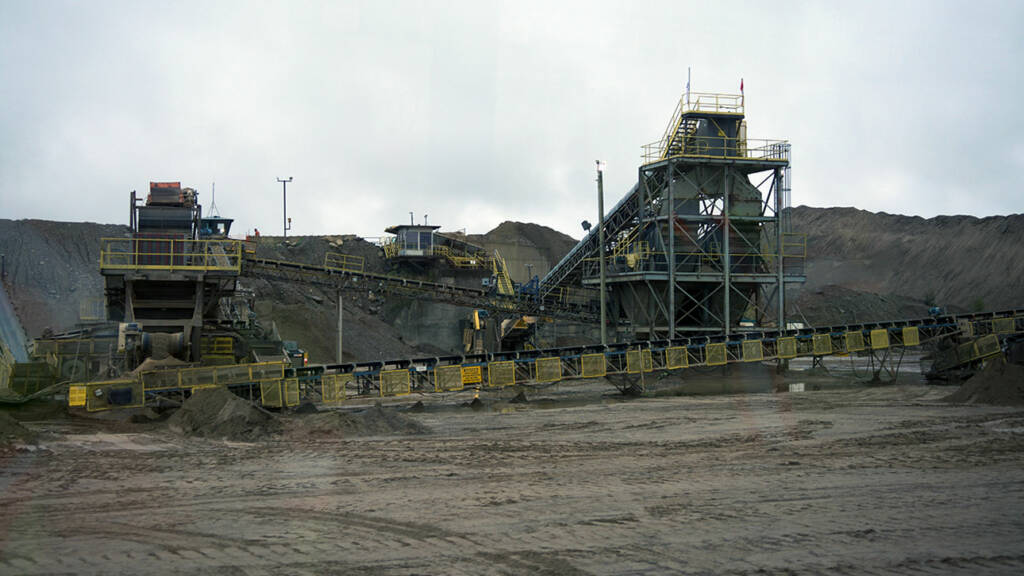
“Since the AG report back in 2016, the receptiveness to RAP has certainly dwindled to the point that many contractors have either reduced or removed it from projects,” said Bernal. “However, I think we’re starting to come back around to it now that we’ve got newer testing that can help evaluate recycled mixes better.” To achieve long-lasting pavements that use RAP, asphalt producers are experimenting with advanced chemical formulations to make the resulting pavement durable in all seasons. “To get that balance, you have to be innovative,” said Bernal.
For contractors, recycling can help reduce reliance on virgin materials, but only if specifications and acceptance continue to evolve.
Supply chain strength determines success
The success of Ontario’s infrastructure plans will be shaped by its supply chains. In the areas of aggregate and asphalt cement, these supply chains are already under stress. Still, there are ways to help the situation. When it comes to aggregates, streamlining the quarry application process could help increase supply. “Right now, the time to get a licence is too long,” said Armstrong. “We need to be more nimble, and in order to do that, we need to take less than 10 years to get a new licence.”
Meanwhile, realigning project procurements so that many asphalt plants could supply materials would help. “Doing this would allow more small and regional plants to help out,” said Bernal. “If we are having an infrastructure boom, such a change would allow more contractors to participate.”
One thing is certain: Without a strong and responsive supply chain, Ontario’s infrastructure goals won’t be limited by planning – they’ll be limited by what can actually be built, and at what cost. As Ontario prepares to build for the next generation, the strength of its roads will depend entirely on the strength of the foundation beneath them.