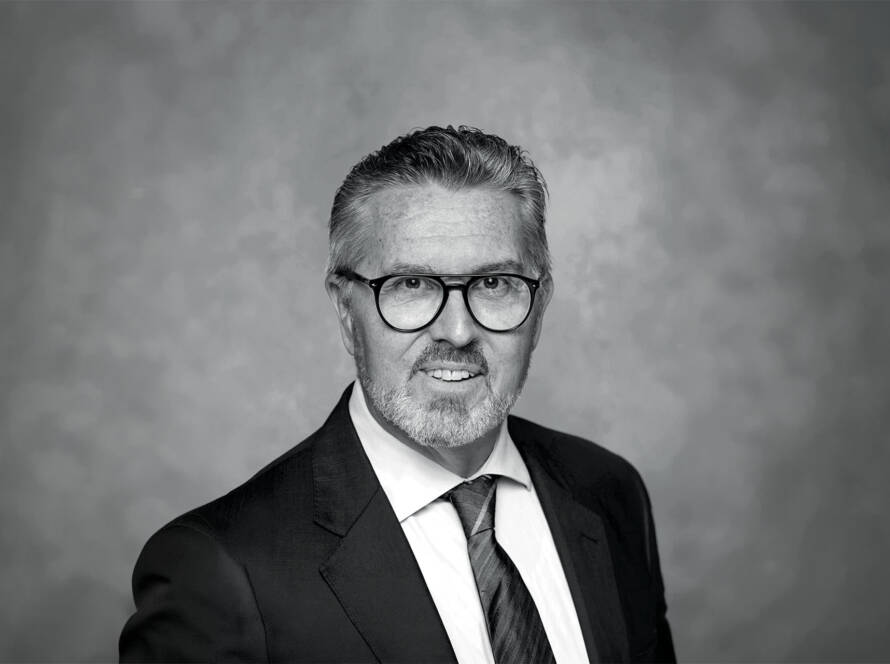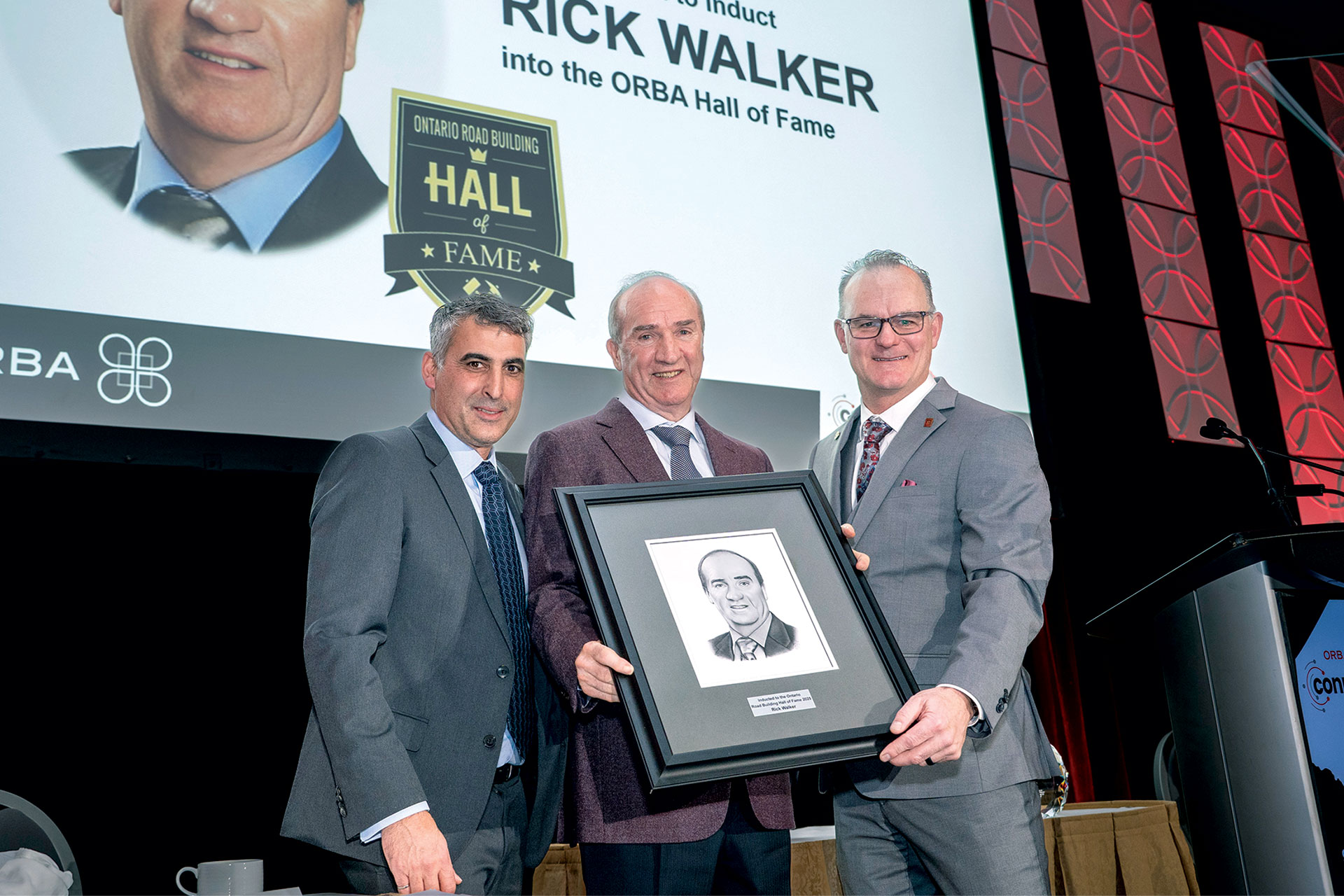
Fresh off his induction into the Infrastructure Hall of Fame at ORBA’s 99th Annual Convention, Consbec president Rick Walker reflects on the projects, relationships, and industry changes that have shaped his decades-long career in Ontario construction.
Rick Walker built his career by seeing things differently and acting on his intuition.
Over decades, he developed a business that reshaped how drilling and blasting work is carried out across Ontario and beyond, focusing on specialization, cost control, and constant improvement. His approach didn’t just change how the work was done – it changed how it was priced, planned, and delivered.
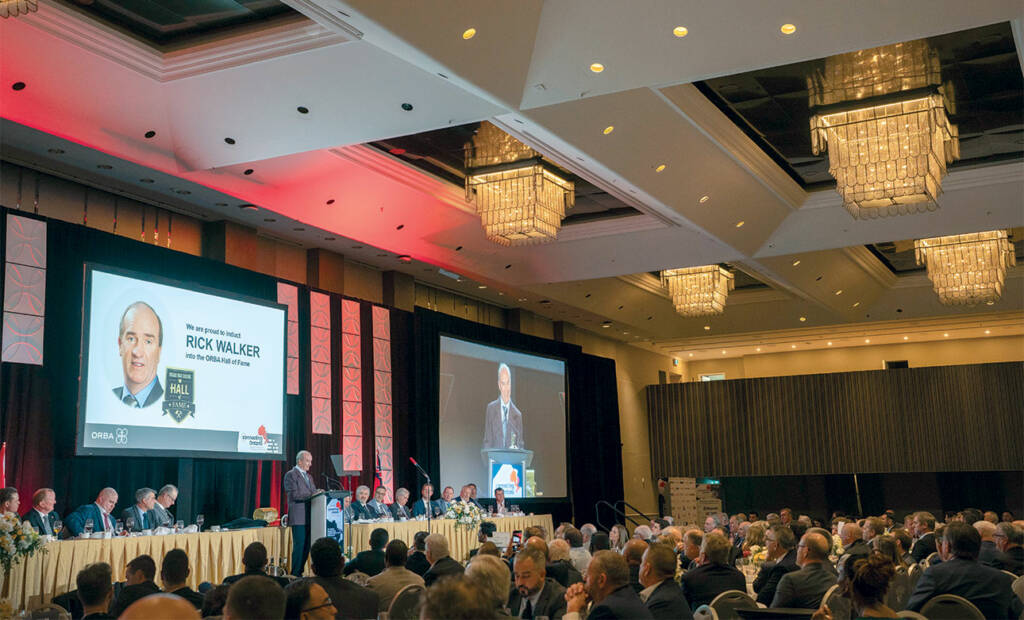
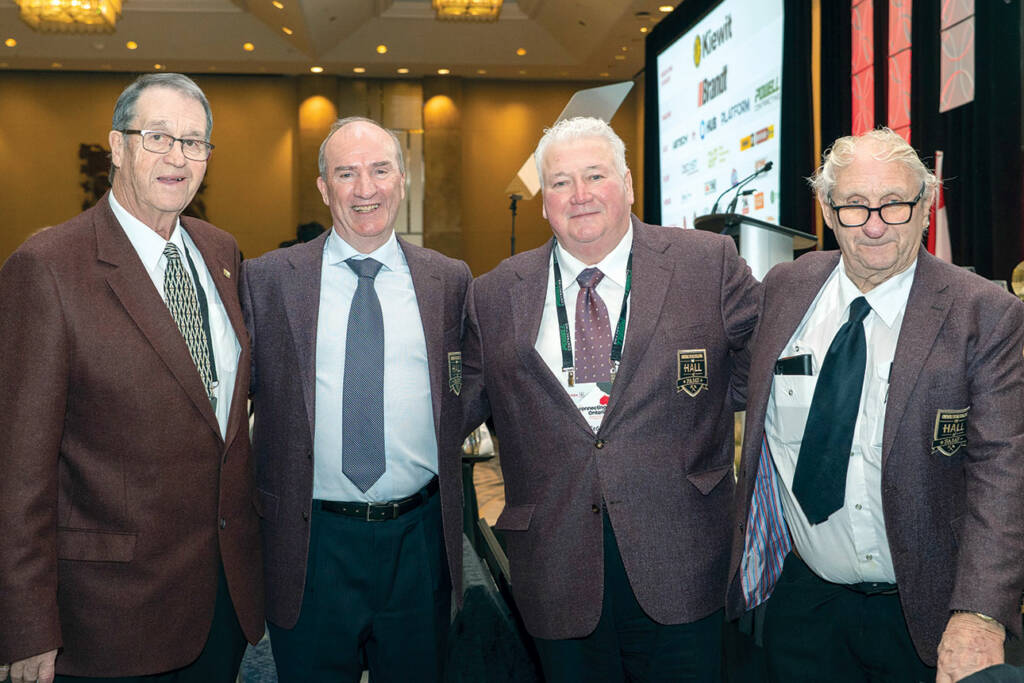
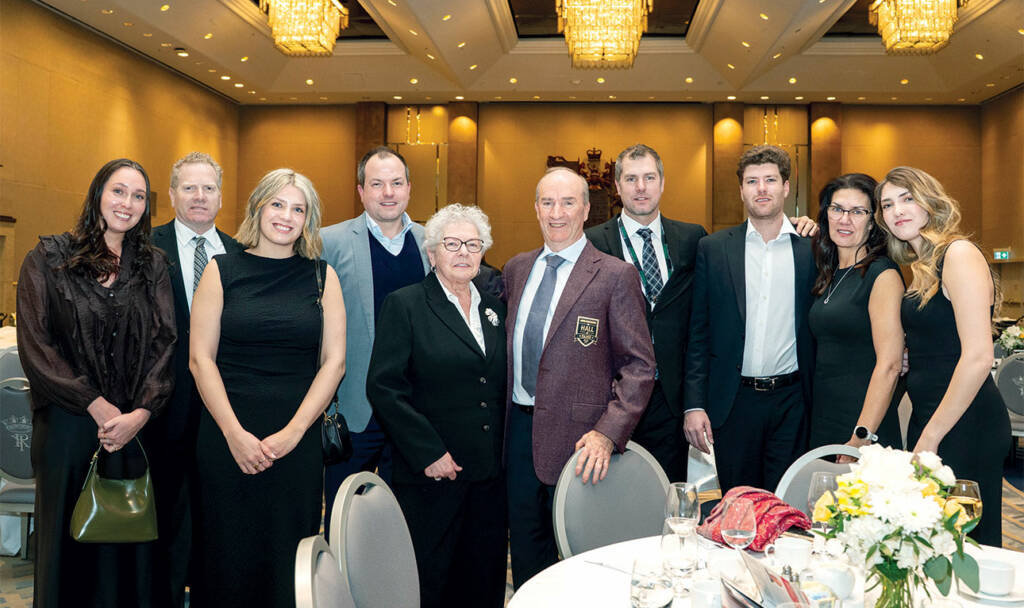
That impact was recognized with his induction into the Infrastructure Hall of Fame. During his acceptance speech on Feb. 3, 2026, at the Fairmont Royal York in Toronto, Walker reflected on the people and opportunities that made it possible. It was a moment that spoke to how he views success: not as a single achievement, but as the result of decisions made, risks taken, and work put in over time. In this conversation, Walker reflects on the path that brought him there.
What did it mean to you to be inducted into ORBA’s Hall of Fame?
Rick Walker (RW): It was an honour. I never even thought about it in my whole life – I didn’t think they would [award] a subcontractor. I couldn’t have done it without the general contractors.
Ontario is a powerhouse. It’s the jobs they gave us that gave me the ability to make a profit, and that’s what allowed me to build everything else. I also couldn’t have done it without my people. I’ve got employees here who have retired and want to come back. We treat them like a family – these are the people who built this thing.
What kind of upbringing shaped the way you think and work?
RW: My parents had 10 kids. Five boys, five girls. My dad had a farm, sawmills, and timber operations. My brothers became farmers. I went toward equipment – loaders, dozers, skidders. I liked that side of it. [I was] working from the time [I was] young. Even at seven years old, you’re feeding chickens or hauling water. You’re always doing something.
Where did your confidence come from?
RW: I think it came from the work. I spent more time on the farm and in my dad’s timber operations than I ever did in a classroom. But somehow my marks were still strong – math especially. Our family just had a way with numbers.
Some academic folks from a school down in the States took notice and sent a fellow up to talk to me. He sat with me for about an hour and a half, just asking questions. At the end, he closed his book, looked at me and said, “We’re in five feet of snow, 27 below zero. How do you know what you know?” I didn’t have a good answer for him. I just said, “I really don’t know.”
If I’m being honest, the confidence came from being around my dad. Watching him run the farm, the sawmills, the timber business – you pick up how to solve problems just by being in it every day. That rubs off on you. The rest I figured out along the way. When I sleep at night, if I have a thought, I wake up and write it down on my notepad. Some mornings I wake up and say, “What was I thinking?” But if I don’t put it on paper, I stay awake. I’ve done that for most of my life. Not all the ideas are good ones, but you keep at it.
You had a path into engineering laid out. Why didn’t you stay on it?
RW: I had an opportunity to study engineering in the States. I had to sign on with a big steel company as part of the deal. My dad and I signed the agreement. But when I got into the work, it just wasn’t the right fit for me. I spent more time dealing with politics than actually doing the work, and that took the fun out of it. I called them up and said, “I’m not coming. I’m going to strike off on my own.”
I picked explosives. Why? Because a lot of people were afraid of it.
That’s exactly what I did. My then-girlfriend, who’s now my wife, was taking nursing – she did not like the nursing part. We jumped into my vehicle and we came to Sudbury to make our fortune.
What did those early years look like for you and your wife?
RW: After we were married, we were not making a very good wage. We had about $167 between the two of us. And I said to her, “Judy, I think we’re going to be okay. I’ve got a plan, and if we stick to it, I think good things will come.” She asked, “How can you say that?” I said, “Because we’re willing to work harder than most, and that counts for a lot.”
Why did you decide to start your own business?
RW: When we first came to Sudbury, I went to work for Gardner Denver. They built drills – surface and underground. They started me in the warehouse so I could learn. Within six months, I was in mechanical. Within a year, they moved me into management – I was fortunate that they gave me those opportunities.
They sent me to the factory. I learned about central purchasing, central warehousing, how these things are put together. I learned a ton. I was lucky to have that experience early on. That led to me working with contractors in Ontario and Manitoba. They would call us up and rent or purchase drills. I could go out and sell them the equipment, and then I could repair it, whatever machine they bought.
What I noticed was that, as general contractors, they were very good at crushing and asphalt. But when it came to drills, they just didn’t have the time to focus on that side of it. They didn’t have mechanics that understood drills – they were fairly new back then.
And as time went on, I started to realize it was always going to be an afterthought for them. A general contractor might get a rock job once or twice in a year or two, and then not see another one for years. I sat down and thought about it. Should I be a general contractor? I had some experience with the equipment. And I started thinking, if I could specialize as a subcontractor, maybe I could do that one piece of it well enough to earn their trust. And if I could keep costs down, they’d have a reason to give me the work.
I picked explosives. Why? Because a lot of people were afraid of it.
What happened once you started?
RW: I started small. One contractor, then within a few months, another contractor. Once I got more, I could expand, and that’s what I did. We were fortunate – the first month went well, better than I expected. And it kept building from there.
One thing that helped early on was convincing the generals to let us do their rock work through the winter. Most people didn’t want to work in those conditions, but it was actually easier – the ground stiffened up, you weren’t dealing with mud, and the blasting went smoother. That kept us busy year-round and gave us a bit of an edge.
Over time, in Ontario, the contractors subbed their rock out. I didn’t do all the work, because once I got going, other people saw there was an opening and started doing it too.
How did you stay competitive?
RW: I had to beat my competition – I had to be able to cut my costs to the road builders, the general contractors. I try to cut my costs for my customers every year. Could I do it on the bits or the steel? Could I do it on the machines themselves, make them better? Could I do it any other way? Most years, we’re successful; some years, we don’t [quite get there], but we’re always trying.
How did that thinking lead you to make explosives?
RW: At a certain point, I realized that if I really wanted to keep cutting costs, my best chance was to make my own explosives. That was the biggest piece I didn’t control. At the time, CIL and DuPont controlled everything. If I kept buying from them, I was never going to get where I wanted to go.
Working with my sons, that’s something I’m very proud of…They’re running the show now, and they’re doing a better job than I ever could have on my own.
A plant came up for sale in Minnesota, and I could get it for a good deal. I bought that plant. I was worried about environmental issues back then on a big open pit, whether the government was going to make me fill it someday, so I did a quitclaim deed. That gave me protection. Then I learned all about explosive plants. That plant was for a water gel explosive, which is a very heavy explosive.
I had that plant for a lot of years. Then [Dr. Melvin A. Cook] came out with emulsion explosives. What we were doing then was using Anthòs, which is a liquid fertilizer. All explosives made in the world, primers included, they all have fertilizer in them. I realized I could make emulsion cheaper than a contractor could buy bagged or stick product. I decided to sell that plant. Then over time, thinking it through, writing down ideas at night, the concept of a mobile explosive plant started to take shape.
Why mobile?
RW: Because some of our jobs only last a year, two years. Quite often, we’d be moving into a government-owned gravel pit for a road job. So I sat down with my people. I put it on the board in our boardroom and said, what do you think?
And what feedback did you get from your team?
RW: The team had their doubts – nobody had ever done something like this before. But they also thought it could work if we could get through the regulatory side of it.
That’s the thing about having good people around you. I might come up with the idea, but it’s the team that figures out how to make it real. We sent it down for approval, and six months later they came back and said they couldn’t see a reason we couldn’t do it. They just needed their inspectors there every day while we were building. The cost was going to be significant – millions. But we believed in it, so we went ahead. As far as we know, it was the first mobile explosive plant of its kind.
It took quite a while because there’s no school you can go to in this world that teaches you how to make explosives. That knowledge has always been kept under control by the big companies. But we’d built a team over the years with real experience in that area, and together we got it done.
When was this?
RW: That was in the early 2000s. The difference now is my plants are smaller, but they’re more efficient. They’re computerized. One person can run them. That didn’t come overnight and it wasn’t just me. That was trial and error, and being able to hire people who had experience in the explosives business and added to this. All this goes back to the same thing – we had to stay competitive. We had to find ways to keep costs down for the road builders, the general contractors.
You’ve made decisions around risk that shaped the business. Can you talk about that?
RW: Blasting is a sensitive business. You’re working with explosives, and no matter how careful you are, there’s always an element of unpredictability. Fly rock was a real concern – that’s rock that gets ejected from the blast site – and if something went wrong, the consequences for everyone involved could be serious.
At one point, we made the decision to step back from MTO jobs because the risk just didn’t make sense for us. It was a tough call, but it was the right one at the time. Eventually, the ministry came back to us. They were having trouble on a large road job and needed help. That was a turning point. From there, we built a real working relationship with the province – open lines of communication, a shared understanding of what the risks are, and how to manage them.
We got all the rock contractors together in North Bay with the government and worked through it as an industry. They brought in a good person to lead it, and together we came up with a blasting zone framework that everyone could work within. Our engineers helped design it, and it’s still in place today.
At the end of the day, these are big provincial projects, and they only get done well when everyone’s working together – the contractors, the subcontractors, and the ministry.
How do you think about the types of work you want to take on?
RW: I can’t take emulsion and go into a city and use it. When you’re working with bulk emulsion, there are real restrictions – you need to be certain distances away from homes, schools, power lines. The permitting requires it, and rightly so. So for close-quarter projects in urban areas, ANFO and bagged product are still the right tools for the job.
We do take on sensitive blasting work when it comes our way, but our bread and butter has always been the large-scale rock projects. That’s where we’ve built our experience and that’s where we can add the most value.
There are good operators out there who handle the urban work well, and we respect what they do. It’s a good industry, and it’s healthier when there’s competition. We’ve helped some of the smaller guys along the way – whether it’s servicing equipment or lending a hand – because we want them to succeed. We need each other out there.
How do you think about hiring and building your team?
RW: When I was younger, I always hired farm kids. They were up early, they didn’t complain, and they knew how to work a full day. But the small family farm started to disappear over the years, so we had to find other ways to identify good people.
What we found is that athletes – hockey players especially – tend to have the qualities we’re looking for. They show up early, they’re disciplined, they know how to take direction, and they’ve learned how to work as part of a team. Those are the things that matter to us. We can teach someone the technical side, but you can’t really teach someone how to be a good teammate.
How do you train them for their roles?
RW: It takes us about five years to develop someone fully in this business. We pay attention to people. Everyone’s got something they’re good at – maybe they don’t even recognize it yet. They may be a strong worker, they may be well-spoken, they may have a mind for the technical side. We try to identify that early and build on it. We start them at the ground level and give them room to grow.
The incentive is straightforward – as people develop, so does their compensation. We take care of our people. If someone’s not quite finding their groove in one area, we’ll move them around and see where they fit best. Everybody deserves the chance to find the right seat. And when they do, that’s when you really see them take off.
How important has family been to the business?
RW: Working with my sons, that’s something I’m very proud of. I never pushed my sons to come back [to work in the business]. I left it up to them. And then all three came back, and I’m grateful they did. It’s interesting, because I see the same things happening that I went through with my dad. You learn by being around it. You listen, you watch, and then you start making your own decisions. They’re running the show now, and they’re doing a better job than I ever could have on my own.
One thing I’ve learned is you listen first, and then you respond. That matters when you’re working with family. Beyond that, it’s just enjoyable. It really is. It’s something we’ve built together over time.
Can you tell me about your sons and what they do for the business?
RW: They’ve each found their own area of the business, and more importantly, they’ve built strong teams around them. Richard looks after the financial and estimating side, Jeff handles operations across Canada and the U.S., and Trevor runs Frontier Lithium. But it’s not just them – they’ve each brought in good people and built something that doesn’t depend on any one person. That’s what you want.
Some of my grandchildren are in the business now, too. If they want to be involved, we’ll find a place for them. But it’s got to come from them – they’ve got to want it and find their own way into it, just like their fathers did.
We’ve covered a lot of ground. Is there anything we missed?
RW: I think we got it pretty well done. I better let you go, but I always tell people – enjoy what you do and smell the roses along the way.