
Ontario is booming.
Between now and 2035, the province will be rolling out more than $220 billion in planned infrastructure investments. Of that total, more than $190 billion is targeted at capital assets such as mass transit improvements, highways, bridges, hospitals, and schools.
The ambitious agenda is unprecedented, and these projects are occurring at the same time as the residential construction sector gathers strength alongside major industrial, commercial, and institutional (ICI) projects. Taken together, the boom is increasing competition for skilled labour, specialized expertise, and the capacity to deliver increasingly complex projects. As projects accelerate across the province, attention is turning from what Ontario plans to build to how those projects will be delivered.
For Mark Mallett, ORBA president and area manager at Kiewit, successful delivery depends on creating the right conditions before construction begins. “Ontario has capacity to build these projects,” said Mallett.
Setting projects up for success
For Mallett, successful project delivery begins long before construction starts. “I think when there is a huge increase in projects that need to be done, it’s important to focus on executable work, put realistic and comprehensive schedules together to set projects up for success, and foster collaborative environments regardless of what type of contract is used.” Every stakeholder, he says, needs a shared understanding of what success looks like and how the project team will get there.
Today’s contractors are expected to serve as delivery partners and team integrators, coordinating stakeholders, managing risk, integrating technology and bringing diverse teams together around a common objective. The engineering community is experiencing the same shift toward earlier collaboration and shared responsibility.

Cost and quality are always important. But now, more than ever, speed is equally a priority to ensure we are adequately meeting the needs of our communities.
Andrew Hurd, ACEC-Ontario
“We’re in a unique moment where most Ontarians would understand that we need to build, and we need to build well,” said Andrew Hurd, executive director of the Association of Consulting Engineering Companies – Ontario (ACEC-Ontario). “Cost and quality are always important; but now, more than ever, speed is equally a priority to ensure we are adequately meeting the needs of our communities in these unprecedented socioeconomic times.”
Hurd believes the industry is moving away from the risk-averse culture that has shaped public infrastructure delivery for decades, with greater emphasis on trust and collaboration among project partners. “We’re seeing increased collaboration with government, with progressive design-build models, alliancing, and integrated project delivery (IPD), which shares risks and rewards among all stakeholders,” he said. “The key is to get people into a room early enough to build relationships.”
Building in adequate preparation time is also essential, says Mallett. Last-minute procurements can create demand spikes, while early procurement calendars allow contractors, suppliers, and consultants to allocate resources more efficiently. Projects also need to be truly ready to proceed by resolving utilities, securing permits, completing property acquisition, and obtaining key approvals before construction begins.
Experience matters
While labour shortages often dominate the conversation, Mallett says Ontario’s greatest pressure point is experienced field leadership. Success depends as much on building a high-performing project team as it does on building the infrastructure itself.
“It’s essential to attract and retain skilled tradespeople, so we can scale alongside demand,” he said. “The skilled trades are where many leaders start in our industry. Right now, the biggest pressure point is experienced field leadership. The leaders in the field, whether superintendent or construction management, are in their positions due to vast experience. One of those leaders doesn’t happen overnight. We need to grow those positions ahead of time.”
That kind of long-term planning is precisely why BuildForce Canada produces 10-year labour forecasts – to help governments, contractors, educators, and labour organizations prepare before shortages emerge. BuildForce Canada’s latest labour-market outlook reflects many of those concerns. The organization projects non-residential construction activity in Ontario will continue climbing through the decade, driven by major investments in transit, healthcare, nuclear, mining, and other sectors. Peak demand is expected around 2029, as multiple large projects overlap across the province.
The forecast also notes that several major developments – including Bruce C, Northern Ontario mining projects, and new data centres – were not included because they had not yet reached the modelling stage. Demands are likely to grow as additional projects move from planning into construction. Hydro One alone has recently advanced multiple major transmission projects intended to support future growth and system reliability. Even where workers are available, however, they may not be available where projects need them.
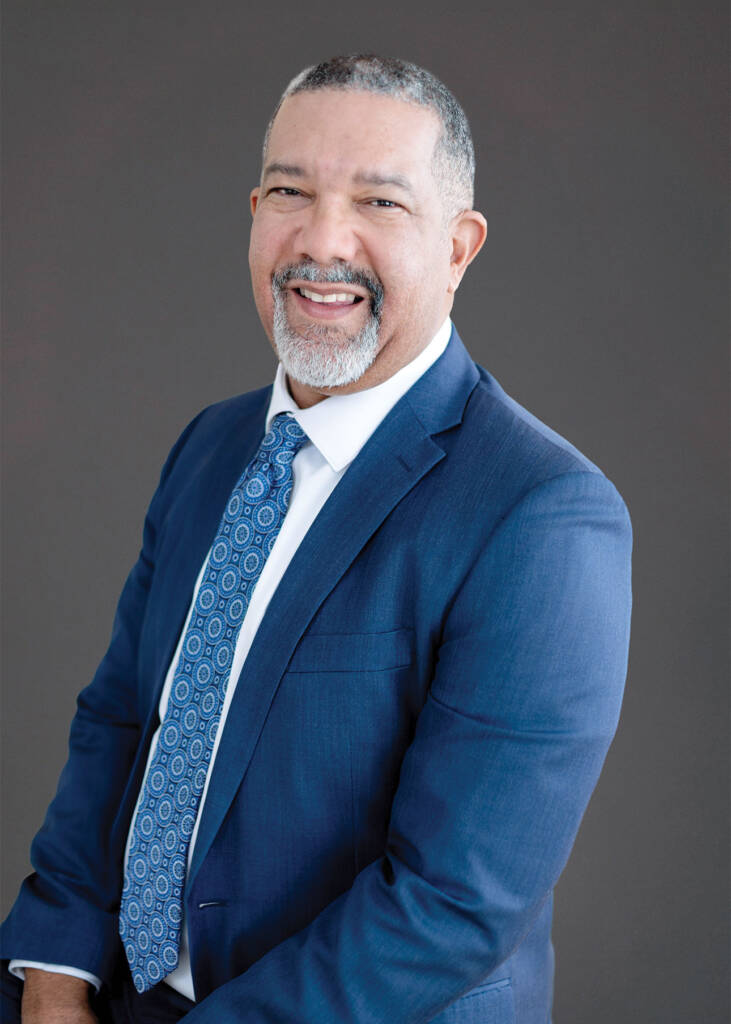
Contractors and owners must understand risk and the appropriate allocation of risk so it can be managed properly.
Mark Mallett, Kiewit
“Given that labour demand is high in many Ontario regions, there isn’t a great deal of incentive for a worker to move from one part of the province to another to find work,” said Irwin Bess, executive director of BuildForce Canada. “Anyone can say on a theoretical level that a worker who is out of work in Sudbury should pack up their bags and find work in Sarnia. But that assumes the worker is able and willing to make that transition.”
The challenge extends beyond the construction workforce. Consulting engineering firms are facing many of the same pressures. “There is no one particular area of need when it comes to consulting engineers,” said Hurd. “It’s more about the growth in professional experience and responsibility. It’s about the ‘missing middle’ – meaning consulting engineers with 10 to 15 years of experience. Those engineers are in demand.”
Hurd says a wave of retiring baby boomers has accelerated career progression for younger engineers, creating opportunities but also leaving firms with fewer professionals who have decades of experience.
The challenge, Hurd suggests, isn’t finding one specialty that’s in short supply – it’s ensuring enough experienced professionals are ready to step into increasingly complex leadership roles as Ontario’s infrastructure program expands. He adds that rigid experience requirements in some RFPs can make it difficult for firms to utilize rising professionals who have advanced quickly but haven’t yet accumulated decades of experience typically expected in those positions.
Capacity is more than people
Labour is only one piece of the equation. Mallett says true capacity means having every part of the construction ecosystem ready to support project delivery. “There is a lot of planning and coordination that needs to be done,” he said. “In some cases, it can take years. It’s not just having enough people ready to go. It’s also having the right equipment, and coordinating asphalt plants, quarries, skilled subcontractors, safety and scheduling systems, stakeholder alignment, and project financing.”
As contractors scale up to meet Ontario’s infrastructure ambitions, Mallett says every part of the supply chain must be able to grow alongside them. Building capacity means having the people, equipment, materials, specialized subcontractors, and systems needed to deliver projects safely and efficiently.
“A successful job is aligning the team, understanding the schedule, and working to make sure we’re progressing as planned, while efficiently communicating and coordinating change,” he said. That same long-term planning is important well before construction begins. “We need an adequate planning runway, with key stakeholders focused on the project from an early stage, including design and engineering,” said Hurd. “We need that upcoming project information as soon as possible, so releasing project pipelines timely and consistently is key.”
Ultimately, building capacity also requires predictability. The industry can invest most confidently in people, equipment, and technology when project pipelines, procurement schedules, and risk allocation allow for long-term planning.
A balanced approach to risk
As Ontario’s infrastructure program accelerates, Mallett says project success will also depend on how risk is allocated between owners and contractors. “[The industry has] had some problems with large, high-risk contracts that are not well understood, and they have resulted in pretty significant disputes,” he said. “We need to avoid that. Contractors and owners must understand risk and the appropriate allocation of risk so it can be managed properly.”
There is a lot of planning and coordination that needs to be done. In some cases, it can take years. It’s not just having enough people ready to go. It’s also having the right equipment, and coordinating asphalt plants, quarries, skilled subcontractors, safety and scheduling systems, stakeholder alignment, and project financing.
Mark Mallett, Kiewit
For Mallett, the goal isn’t to eliminate risk, but to ensure it is assigned to the party best equipped to manage it. That allows contractors to pursue opportunities without overextending their businesses while giving owners greater confidence that projects can be delivered as planned. Fair risk allocation, he argues, is only possible when project partners maintain open communication from planning through construction. Hurd believes that approach depends on continued collaboration throughout the project lifecycle.
“The importance of a no-silo mentality is key – we need various parts of various governments continuing to talk to each other,” he said. “We need continued clear political direction, and terms and conditions in contracts that apportion risk fairly – with balanced indemnities and clear and unambiguous language.”
Both Mallett and Hurd argue that collaboration extends well beyond procurement models. It requires open communication among owners, designers, contractors, and government throughout planning and construction, with contracts that encourage shared problem-solving rather than shifting unnecessary risk onto one party.
Building a sustainable infrastructure program
As Ontario’s infrastructure program continues to expand, Mallett says success will depend not only on delivering more projects, but on building an environment that allows the industry to perform consistently over the long term. If demand begins to outpace available capacity, he believes governments and owners should focus first on projects that are truly ready to proceed.
“For those [projects] that are not yet at that stage, invest in early contractor involvement, and advance early preparation scopes when the design is mature and ready to accurately schedule, price, and completely execute,” he said. He also encourages owners to vary the size of projects entering the market, allowing both regional contractors and larger national firms to participate while maintaining a healthy competitive environment. At the same time, he cautions that new construction cannot come at the expense of maintaining Ontario’s existing infrastructure.
We’re in a unique moment where most Ontarians would understand that we need to build, and we need to build well.
Andrew Hurd, ACEC-Ontario
“We can’t get behind on maintenance programs,” he said. “ORBA says funding for the rehabilitation budget is not keeping up with inflation; if infrastructure is not maintained, we may end up with early replacements.”
Mallett also believes owners can play an important role in encouraging innovation by rewarding productivity improvements and creating opportunities for contractors to introduce new technologies on projects. Mallett says a healthy infrastructure ecosystem is built on credible project pipelines, mature projects, transparent procurement calendars, and realistic schedules. “It’s an environment that rewards investment in productivity and improved outcomes,” he said. “There is consistency across the board and effective communication, so risks are shared appropriately, intelligently, and fairly.”
For Mallett, that vision comes back to the same principle that has shaped Ontario’s evolving approach to project delivery: infrastructure succeeds when every stakeholder is working toward the same objective. Conversely, repeated starts, stops, and unresolved disputes can ripple throughout the project team, undermining productivity and discouraging future investment. “I think it’s about the culture on the projects – we are one team with aligned goals,” he said. “That’s what makes small and large projects successful.”
As Ontario embarks on one of the largest infrastructure programs in its history, its ambitions will ultimately be measured not just by what gets built, but by how well projects are positioned to succeed.