The hard hat has been a fixture on construction sites for more than a century. First introduced commercially by E.W. Bullard in 1919, the earliest versions were made from canvas and leather, and by the 1930s, head protection had become standard equipment on major projects across North America.
While hard hats have improved over the decades, their basic purpose has remained largely the same: protecting workers from impacts to the top of the head. They were not designed to address the full range of head-impact hazards workers may encounter in the field, including those resulting from falls or impacts from the side.
The risks are significant. A U.S. study by the National Institute for Occupational Safety and Health found that traumatic brain injuries (TBIs) accounted for 25 per cent of construction fatalities between 2003 and 2010, with falls responsible for more than half of fatal work-related TBIs.
While Type 2 head protection is not currently required across Ontario construction sites, new requirements are coming. Effective July 1, 2027, workers on construction projects who may be exposed to side-impact hazards will be required to wear Type 2 head protection. Chin straps or other retention systems will also be required where there is a risk of the headwear becoming dislodged.
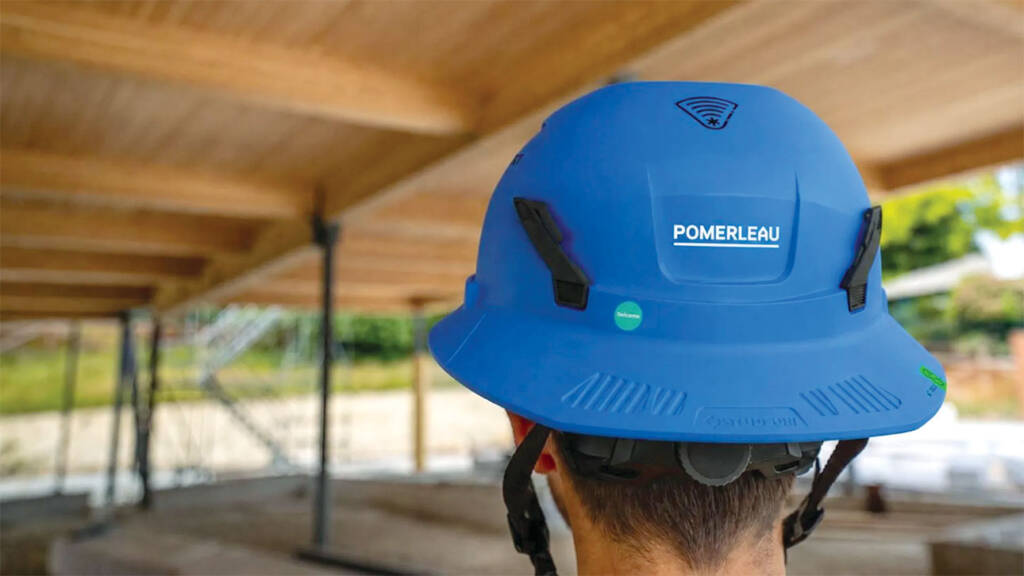
Some of Canada’s largest contractors aren’t waiting for that regulatory change. As of July 1, 2026, the Canadian Construction Safety Council (CCSC) requires Type 2 head protection with integrated four-point chin straps on jobsites operated by its 12 member companies: Aecon, AtkinsRéalis, Bird, EBC, EllisDon, Flatiron Dragados, Graham, Green Infrastructure Partners, Kiewit, Ledcor, PCL, and Pomerleau.
“Strengthening baseline safety requirements across our member sites is an important step toward better protecting workers from known risks,” said Kieran Hawe, president and CEO of EllisDon. “This change reflects a collective commitment from CCSC members to align on higher standards and to adopt proven solutions that can reduce serious injuries across the industry.”
“This initiative reinforced that safety improvements are most effective when approached collectively,” said Jean Beaudin, the vice president, Health & Safety, at Pomerleau. “Through CCSC, leading contractors came together around a common goal: reducing serious head injuries and raising standards across the industry. We believe that collaboration is one of the most powerful tools we have to make construction safer for everyone.”
Type 1 vs. Type 2 protection
The primary difference between Type 1 and Type 2 head protection comes down to where they provide impact protection and how they’re tested.
- Impact protection: Where Type 1 hard hats are designed to protect against vertical impacts, such as falling objects, Type 2 hard hats provide top and lateral impact protection. This difference helps reduce the force transmitted to the front, back, sides and crown of the head, which is particularly important if a worker slips, trips, falls or comes into contact with fixed structures or equipment.
- Testing requirements: Type 2 head protection must meet the same top-impact and penetration-resistance requirements as Type 1, as well as additional testing for lateral impact protection.
The chin strap is a separate feature from the Type 2 classification. Its purpose is to help keep the helmet securely in place during a fall or other incident. The additional protection is particularly relevant on road construction sites, where workers operate around moving vehicles and heavy equipment and frequently mount and dismount machinery. Those activities increase the risk of struck-by incidents and falls where an impact may come from somewhere other than directly overhead.
“Workers today routinely face a multitude of hazards such as slips, trips, and falls, working in tight spaces, protruding materials, overhead work, and interactions with moving equipment,” said Deborah Moskal, director, Stakeholder and Client Engagement, at the Infrastructure Health & Safety Association (IHSA). “The broader protection provided by Type 2 hard hats better reflects the realities of modern construction environments.”
Introducing Type 2 hard hats to the jobsite
Selecting compliant head protection is only part of the transition. Contractors also need to consider how the equipment fits, feels, and functions for the workers expected to wear it throughout the day. Education and worker acceptance also play a role in whether the change succeeds.
“Providing workers with opportunities to see, handle, and try different models can play an important role in building acceptance and confidence,” said Moskal. “Hands-on experience helps workers better understand the equipment’s design, functionality, and benefits, while allowing organizations to identify options that best meet the needs of their workforce.”
The broader protection provided by Type 2 hard hats better reflects the realities of modern construction environments.
Deborah Moskal, Infrastructure Health & Safety Association
In the months leading up to the transition, Pomerleau worked with trade partners and unions to understand how the new head protection would affect workers day to day, answer questions and address concerns before the CCSC requirement took effect. The company also developed FAQs, educational materials, and a brochure highlighting certified Type 2 hard hat models available on the market.
“Ultimately, the success of the rollout came from treating this as a collective effort,” said Beaudin. “By combining clear communication, practical resources, and ongoing collaboration with our trade partners, we were able to build understanding, alignment, and momentum across our sites, all while keeping the focus where it belongs: protecting people.”
Lessons from the rollout
As Type 2 head protection becomes more common, contractors considering the transition can draw on the experience of companies that have already made the change, particularly when it comes to equipment selection, worker involvement, and communication.
“One key lesson is that successful implementation depends as much on communication as it does on equipment,” said Beaudin. “People are far more willing to embrace change when they understand the purpose behind it and can see how it benefits them directly.”
Some adjustment should also be expected. Giving workers time to adapt, gathering feedback, and addressing practical concerns as they arise can help new equipment become part of everyday practice. “Just as fall protection systems, cut-resistant gloves, and other innovations have become common practice, enhanced head protection represents an important additional safeguard,” said Beaudin.
With Ontario’s new requirements taking effect July 1, 2027, more contractors will soon need to consider how Type 2 head protection fits into their own safety programs. “As with any significant industry change, a thoughtful implementation process that balances safety, practicality, and worker engagement will be key to achieving long-term success,” said Moskal.